
UK Hill Breeds?
“It was a great show to showcase production oriented sheep!”
Hill sheep are hardy, thrifty breeds in the UK adapted to survive and graze on harsh, marginal, or mountainous terrain with poor soil and short growing seasons. They are characterized by their resilience, excellent mothering abilities, and ability to rear lambs on sparse grazing.
Common hill breeds include:
Scottish Blackface: The most numerous hill breed in the UK, known for hardiness and producing gourmet lamb.
Cheviot (North and South Country): A white-faced, alert breed from the Cheviot Hills, valued for longevity and mothering skills.
Herdwick: A territorial breed native to the Lake District, often called the "smiling sheep."
Swaledale: Found in Northern England, these sheep have distinctive curled horns and white-muzzled faces.
Welsh Mountain: One of the oldest breeds, tiny but impressive, thriving in Welsh valleys.
Kerry Hill: A medium-sized breed from Powys, Wales, with distinctive black markings on a white face.
Hill Radnor: A large, boned breed from mid-Wales with a light brown face and legs.
Black Welsh Mountain: A small dual-purpose breed with a dense, black fleece.
These breeds often form the foundation of a stratified breeding system, where they are crossed with upland or lowland breeds (like the Bluefaced Leicester or Border Leicester) to produce commercial crossbred ewes, such as Mules.
The NAHSS’s emphasis is on UK Hill breeds and the 3-tiered stratified breeding system. The following breeds are at present in the US and have their own classes:
Scottish Blackface, North Country Cheviot, Herdwick, Border (South Country) Cheviot, and Black Welsh Mountain, and Kerry Hill, as well as Mules/Halfbreds.
Hill Breeds
-

Scottish Blackface
Hardy, thrifty, independent, and excellent mothers that lamb easily, the SBF breed produces outstanding gourmet lamb using rough and coarse grazing ground. Perhaps the finest gourmet quality, the carcass is free from superfluous fat and waste, and fits very well into the burgeoning ethnic market.
The Scottish Blackface ewe has a long life and typically will give four or five lamb crops on the hill or marginal ground and a further two or three crops on the lower ground.
-
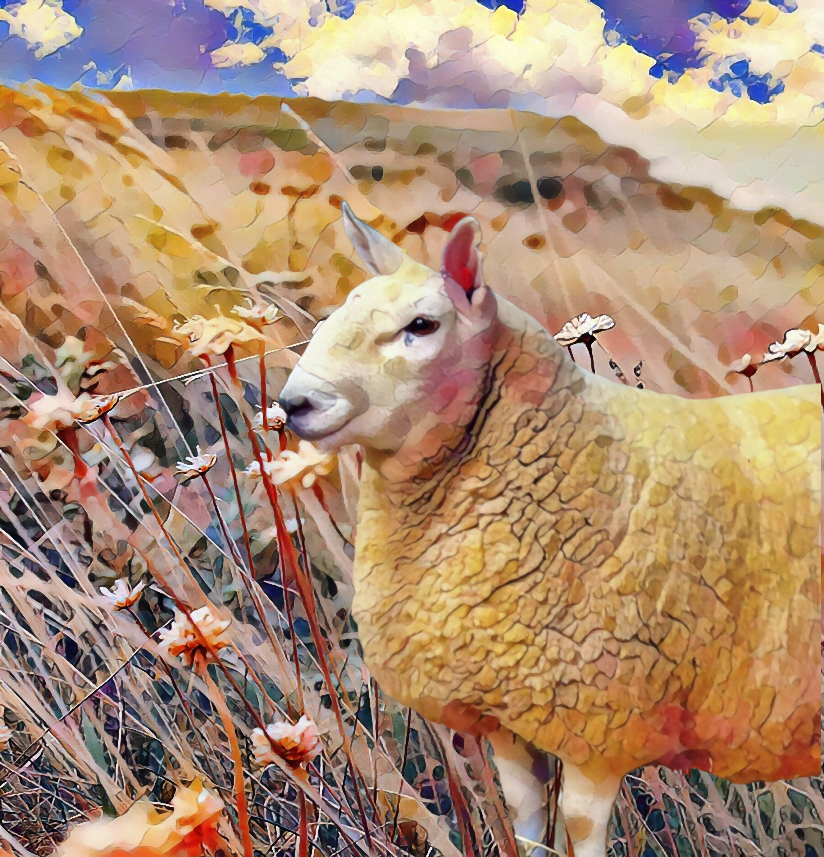
North Country Cheviot
North Country Cheviot sheep are intelligent, self-reliant, resourceful and among the healthiest and most long lived breeds.
The North Country is an intelligent, tough, resourceful sheep that produces both a superior lamb crop and a fleece that delights handspinners.
It has outstanding crossbreeding ability and can be used as either the sire or the dam breed. The resulting lambs from cross-breeding to meat breeds have superior carcasses. At 90 to 120 days a first class North Country lamb will yield a carcass of around 45 pounds with a high proportion of lean meat of excellent quality.
-

Herdwick
Known as the “smiling sheep” from the Lake District, the Herdwick breed is the ultimate Hill breed.
A sturdy, dual-purpose breed, producing uniquely flavoured lamb and mutton and a coarse grey wool, they were made famous by authors Beatrix Potter and James Rebanks of the UK.
Genetics have recently been imported to the US.
Turned out to graze wild on the fells, Herdie mothers raise hardy lambs on native herbage, and look happy doing it!
-

Border (South Country) Cheviot
Though Cheviots may come in smaller packages, they contain for the sheepman a surprising combination of highly desirable qualities. They are noted for hardiness, longevity, productiveness, milking, and mothering ability and for their great activity.
They are high in quality and hang a presentable carcass that has a minimum of outside fat for the amount of carcass lean produced. They utilize rough, low producing hill country very profitably with relatively little assistance from man and even less from the elements. Where there is a really tough clean-up job to be done to convert waste land into dollars, more and more sheepmen are discovering that “Cheviots can take it.”
-Courtesy of the American Cheviot Sheep Society
-

Black Welsh Mountain
Black Welsh Mountain Sheep (BWMS) are a small dual purpose breed that provides excellent mild mutton and a completely black, dense and durable fleece. BWMS are small and easy to handle and are ideal for farms where their hardiness, good mothering and feed efficiency are significant assets. Rams have attractive horns that curls around their ears and ewes are polled. They make a perfect small farm sheep.
The US association follows the UK breed standard. The most unusual part of which is the management of BWMS’s tails. BWMS must retain the tail long and undocked. In the Welsh Mountain Sheep this provides cover and protection for the udder. BWMS are flystrike resistant, and so while in some breeds a long tail is a health hazard, in BWMS it is not.
Lambing percentages are typically 175%. Ewes are good mothers, deep milkers and lambs are vigorous, quick to suckle and fast growing. The average weight of a mature ewe is around 100 pounds, while the average ram weighs between 132-143 pounds.
The breed produces premium quality meat with a minimum of wasteful fat. It is richly colored, full flavored, but remains mild even when butchered as mutton. Finished purebred lambs average 30-40 pounds carcass weight.
-Courtesy of the American Black Welsh Mountain Sheep Association
-

Kerry Hill
Originating in the hill borders of Wales and England, this striking breed can now be found in the United States.
Crossing Sires
-

Bluefaced Leicester
With its long body, milkiness and undisputed crossing qualities, the BFL has earned its spot as the most utilized crossing sire in the UK.
Made famous by its “mule” progeny, everyone should have a BFL ram in their Hill flock.
-

Border Leicester
Before the Bluefaced Leicester was the main crossing sire to make mule lambs, the Border Leicester was traditionally used before it fell out of favor for that specific task.
However, its potential is being realized yet again, and Scottish Haflbreds (resulting offspring when a North Country Cheviot is put to a Border Leicester tup) and Greyface Mules (Scottish Blackface and Border Leicester cross lambs) are making a comeback!
Length of body, rate of growth, and milky and maternal traits shine when combined with smaller and slower growing hill breeds.
There’s plenty of reasons to consider adding some Borders to your flock!

Mules
The resulting offspring of a Bluefaced Leicester ram and a hill-breed ewe, the Mule is the second part of the 3-Tier Breeding System.
The mule ewe is the Golden Ticket. She is the Crown Jewel.
The secret sauce.
She is the crème de la crème and the most important part of the whole system.
She has inherited all of the great attributes from both parents: the thriftiness, health and hardiness, and great mothering instinct from her hill-breed mother, and the fast growth, long body, prolificacy and milkiness from her father.
Why does all this matter?
She’s going to raise your Prime Market lambs.
Any Other British Breed
Raise a British Breed of sheep?
Bring ‘em to the show!


Sheep in this category will compete against each other in an entirely different show, with a perpetual trophy shield- donated by a past UK judge, Mr. Richard Spencer-to the winner!
These would include:
Shetland
Dorset (Horned and Polled)
Lincoln Longwool
Leicester Longwool
Jacob
Cotswold
Shropshire
Wensleydale
Teeswater
Suffolk
Hampshire Down
Oxford
Southdown
Babydoll Southdown
Romney
Soay
Wiltshire Horn
Texel *Not a British breed, but essential to the stratified breeding system
***All sheep from breeds with purebred registration should be registered.
Exemptions will be made for UK breeds that are grading up, but even those sheep must be 80% or more pure.***